For centuries, lace has been used extensively in fashion and design because it is a delicate and intricate fabric. Whether you’re adding a touch of elegance to a garment, creating home décor, or embellishing a wedding gown, working with lace calls for accuracy, attention to detail, and the right needles. This guide will cover common mistakes to avoid, how to handle this delicate fabric, and how to select the best needle for sewing lace.
Why Choosing the Right Needle Matters
If handled incorrectly, lace is a delicate fabric that can easily snag, tear, or lose its elaborate design. Uneven seams, unsightly holes, or skipped stitches can all be caused by using the incorrect needle. Conversely, a well-matched needle guarantees seamless stitching, reduces fabric deterioration, and enhances the beauty of your lace projects.
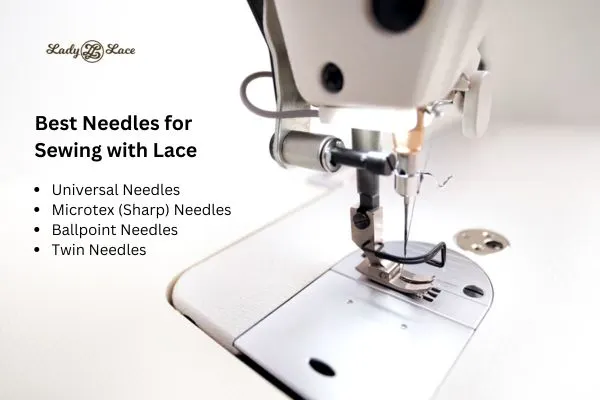
What Are the Best Needles for Sewing with Lace?
The correct needle is essential when working with lace. These are the best options:
1. Universal Needles
- Size Suggestion: 80/12 or 70/10
- Ideal For: Lace fabrics that are lightweight
The Reason It Works With a slightly rounded tip that works well for woven materials like lace, universal needles are multipurpose. If you’re not sure which needle to use, they’re a great place to start.
2. Microtex (Sharp) Needles
- Suggestions for Size: 60/8 or 70/10
- Ideal For: Delicate or fine lace
The Reason It Works The extremely sharp tip of Microtex needles pierces through delicate textiles without snagging or pulling. For precise stitching on complex lace designs, they are perfect.
3. Ballpoint Needles
- Suggested Size: 70/10
- Ideal For: Elastic or stretch lace materials
The Reason It Works In stretch or knit lace fabrics, the rounded tip of a ballpoint needle prevents tears by sliding between fibers instead of piercing them.
4. Twin Needles
- Suggested Size: 2.0/70
- Ideal For: Lace with decorative stitching
The Reason It Works Twin needles create parallel rows of stitching, perfect for decorative hems or adding a professional finish to lace embellishments.
Tips for Sewing with Lace
1. Test on Scrap Fabric
Use a scrap piece of lace to test the stitch and needle settings before beginning your project. This reduces the possibility of causing damage to your primary fabric and guarantees that you have selected the best needle.
2. Use a Lightweight Thread
To match the delicate lace, use a fine thread, like silk or polyester. The fabric’s design may be distorted by heavier threads that overwhelm it.
3. Adjust Your Stitch Settings
- Stitch Length: To keep the fabric from bunching, use a stitch that is a little bit longer (2.5–3 mm).
- Tension: To prevent puckering, slightly reduce the tension.
4. Stabilize the Fabric
Because of its openness, lace can be challenging to sew. To give support while stitching, place tissue paper or a water-soluble stabilizer underneath the lace. After the stitching is finished, just take off the stabilizer.
5. Sew Slowly and Steadily
Working with lace requires patience. Reduce the speed of your machine to keep things under control and avoid accidents.
Common Mistakes to Avoid
1. Using Dull or Damaged Needles
The fabric may get snagged or torn by a dull needle. When sewing lace, always use a fresh, sharp needle.
2. Ignoring Thread Compatibility
Heavy threads may cause uneven seams or skipped stitches. For best results, use a lightweight thread with the best needle.
3. Skipping Stabilization
Fabric distortion and uneven stitching can result from attempting to sew lace without support. Prior to sewing, always stabilize the lace.
Projects That Shine with Lace
Here are a few ideas to inspire your lace projects:
- Bridal Veils: For elaborate designs, use a Microtex needle.
- Curtains and Home Décor: For lightweight lace, use a universal needle.
- Stretch Lace Tops: To manage the elasticity, use a ballpoint needle.
- Decorative Table Runners: Use twin needles to add decorative stitches.
Making the Most of Your Lace Sewing Projects
If you have the proper equipment, sewing with lace can be a fulfilling hobby. With careful fabric preparation, careful sewing, and the right needles for the job, you can produce gorgeous pieces that highlight the beauty of this classic fabric.
The next time you’re prepared to work on a lace project, keep these pointers in mind. All set to begin? Take your favorite lace fabric, choose the ideal needle, and start creating!